PVC Ball Valves for Agricultural Irrigation: A Complete Guide
Learn how PVC ball valves support agricultural irrigation systems, how to select the right valve, and what to consider when choosing a reliable valve manufacturer for your irrigation needs.
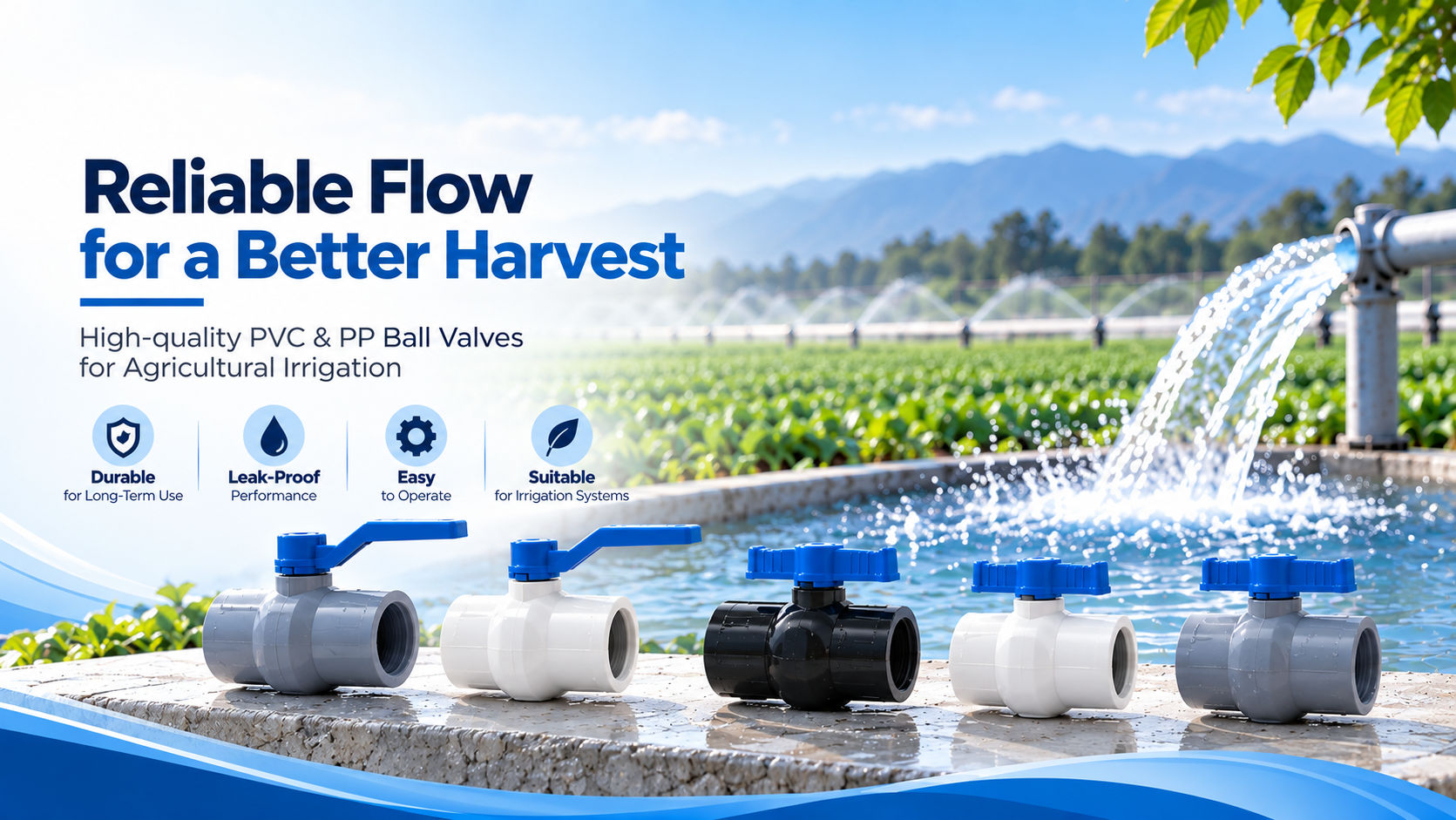
PVC Ball Valves for Agricultural Irrigation: A Complete Guide
Agriculture depends on efficient water management. Whether water is being transported through pipelines, distributed across farmland, or supplied to different irrigation zones, choosing the right flow-control components is essential for a well-organized irrigation system.
PVC ball valves are widely used in irrigation and water distribution applications because they are lightweight, corrosion-resistant, and easy to operate. They provide a practical way to start, stop, and control the flow of water through compatible piping systems.
At Farmson, we focus on PVC and PP ball valve solutions for agricultural and irrigation applications, helping customers explore suitable products for their water management requirements.
What Is a PVC Ball Valve?
A PVC ball valve is a flow-control device that uses a rotating ball with a hole through its center. When the handle is turned, the ball rotates to open or close the water passage.
When the opening aligns with the pipeline, water can flow through the valve. When the ball rotates approximately 90 degrees, the passage closes and stops the flow.
This straightforward mechanism makes PVC ball valves useful in many water distribution systems.
Why Are PVC Ball Valves Used in Agricultural Irrigation?
Agricultural irrigation systems require components that can handle regular operation and changing environmental conditions. PVC ball valves offer several practical advantages.
1. Corrosion Resistance
PVC does not rust like conventional iron or steel. This makes PVC ball valves suitable for many water distribution applications, provided the valve materials are compatible with the water and operating conditions.
2. Lightweight Construction
PVC valves are generally lightweight compared with many metal alternatives. This can make transportation, handling, and installation more convenient.
3. Easy Operation
Quarter-turn operation allows users to open or close the valve quickly. This is helpful when managing water flow to different sections of an irrigation network.
4. Low Maintenance Requirements
PVC ball valves do not require painting to prevent rust. Proper installation, periodic inspection, and the use of compatible materials can help maintain reliable operation.
5. Practical for Water Distribution
PVC ball valves can be incorporated into suitable agricultural pipelines, water distribution networks, and irrigation arrangements. The correct valve depends on the required pressure rating, pipe connection, size, and application.
PVC Ball Valves vs. PP Ball Valves
PVC and PP ball valves are both used in fluid-handling applications, but their properties and suitability can differ.
PVC stands for polyvinyl chloride, while PP stands for polypropylene. The appropriate material depends on the operating temperature, chemical compatibility, pressure requirements, connection type, and installation environment.
When selecting a valve, consider the following:
- Application requirements: Identify the type of fluid and intended use.
- Operating temperature: Check the manufacturer's permitted temperature range.
- Working pressure: Confirm that the valve is rated for the system's operating pressure.
- Connection compatibility: Ensure that the valve fits the pipeline and connection standard.
- Installation conditions: Consider whether the valve will be installed indoors, outdoors, or in an exposed agricultural environment.
Rather than choosing a valve based only on material or price, evaluate its specifications against the actual requirements of your irrigation system.
How to Choose the Right Ball Valve for Your Irrigation System
Selecting the right valve can help make an irrigation installation easier to operate and maintain.
Step 1: Identify the Required Valve Size
Determine the pipeline diameter and connection dimensions before purchasing a valve. A suitable connection helps avoid unnecessary installation complications.
Step 2: Check the Pressure Rating
Review the operating pressure of your irrigation system and compare it with the valve manufacturer's specifications. Never assume that all valves of the same size have the same pressure rating.
Step 3: Select the Appropriate Material
Compare PVC and PP options according to the operating environment, temperature, and fluid compatibility.
Step 4: Review Product Quality
Consider dimensional consistency, handle operation, sealing performance, material quality, and the manufacturer's stated specifications.
Step 5: Choose a Suitable Supplier
For agricultural businesses, distributors, wholesalers, and irrigation equipment dealers, a dependable supplier can help with product selection, specifications, and ongoing purchasing requirements.
Common Applications of PVC Ball Valves
Depending on the valve's specifications and installation requirements, PVC ball valves may be used in:
- Agricultural irrigation pipelines
- Water distribution systems
- Greenhouse irrigation installations
- Garden and nursery watering systems
- Pipeline isolation and maintenance points
- Suitable water supply and fluid-handling applications
Always verify the intended use and technical ratings of the particular valve before installation.
Why Choose Farmson for PVC and PP Ball Valve Solutions?
Farmson focuses on PVC ball valves, PP ball valves, and irrigation valve solutions for agricultural and water distribution applications.
We understand that businesses need clear product information when evaluating components for their projects or distribution requirements.
Our website helps customers explore available product categories and identify valve solutions that may suit their applications.
Whether you are an agricultural equipment distributor, irrigation installer, wholesaler, or business sourcing valves for a project, we encourage you to review the available product specifications and contact our team to discuss your requirements.
Frequently Asked Questions
What is a PVC ball valve used for?
A PVC ball valve is used to open or shut off the flow of compatible fluids through a pipeline. It is commonly used in suitable water distribution and irrigation systems.
Are PVC ball valves suitable for agricultural irrigation?
Yes, appropriately rated PVC ball valves are used in many agricultural irrigation systems. Their suitability depends on operating pressure, temperature, connection compatibility, and installation conditions.
What is the difference between PVC and PP ball valves?
PVC and polypropylene have different material properties and operating limits. The correct choice depends on the application, temperature, chemical compatibility, and product specifications.
How do I select the correct ball valve size?
Check your pipeline diameter, connection type, required flow capacity, and system pressure. Consult the manufacturer's specifications to confirm compatibility.
Where can I find agricultural irrigation valve solutions?
You can explore the product categories on the Farmson website to review available PVC and PP ball valve solutions and contact the team for product-related inquiries.
Conclusion
PVC ball valves are useful components in many agricultural irrigation and water distribution systems. Their lightweight construction, corrosion resistance, and straightforward operation make them a practical option for suitable applications.
Choosing the right valve requires attention to material, pressure rating, temperature, dimensions, and installation requirements.
Explore Farmson's PVC and PP ball valve range to learn more about irrigation valve solutions for your business.
Topics