PVC vs PP Ball Valves: Key Differences | Farmson
Compare PVC vs PP ball valves, understand their material differences, and learn how to select suitable valves for agricultural irrigation and water distribution.
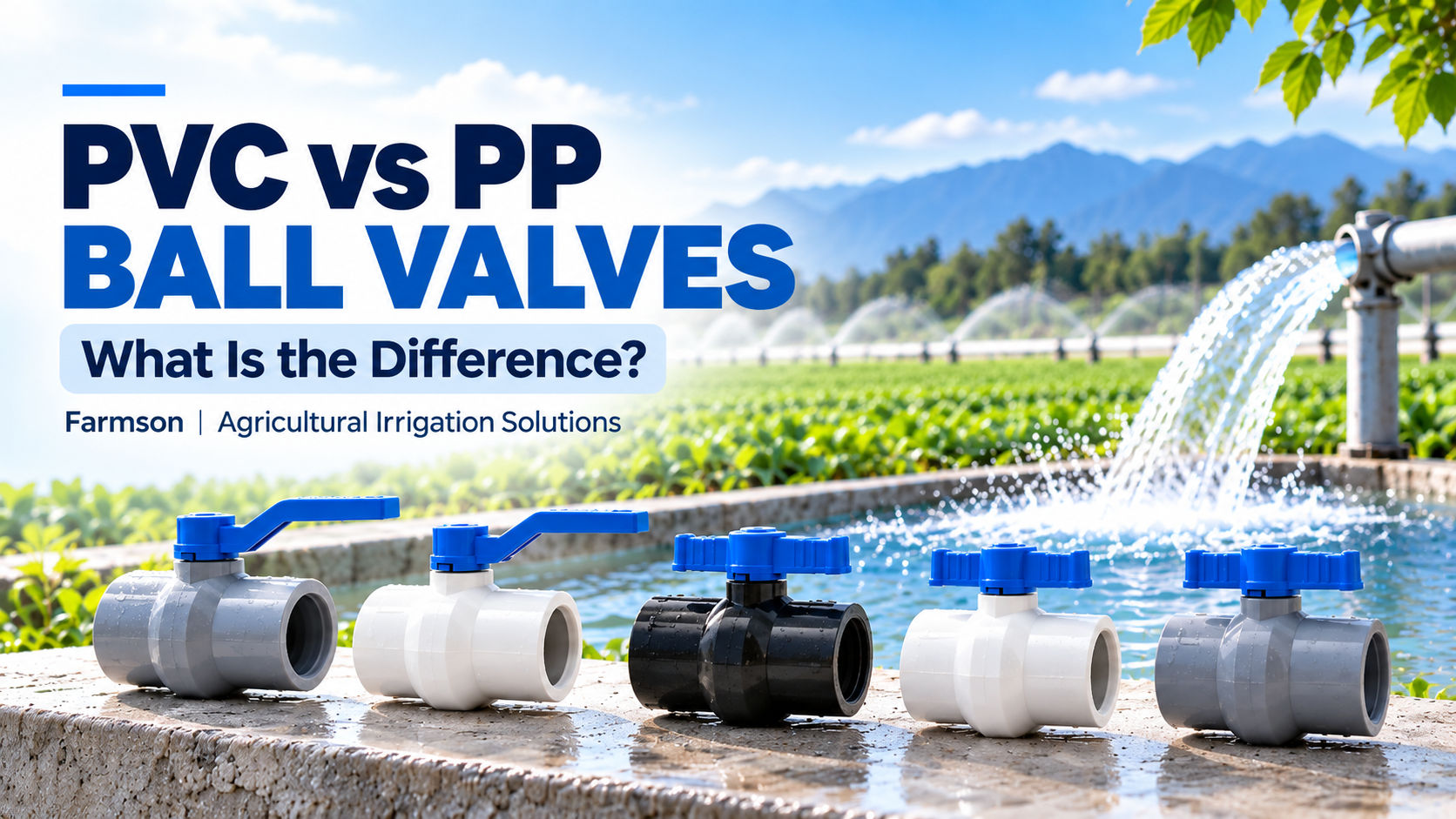
PVC vs PP Ball Valves: What Is the Difference?
When choosing valves for agricultural irrigation, water distribution, or other fluid-handling applications, the material of the valve is an important consideration. PVC and PP ball valves are two plastic valve options commonly used in these systems.
Although both types use a rotating ball mechanism to control fluid flow, they are manufactured from different polymers and may have different suitability depending on the operating environment.
Understanding the differences between PVC and PP ball valves can help farmers, irrigation installers, distributors, wholesalers, and procurement teams make more informed purchasing decisions.
In this guide, Farmson explains the key differences between PVC and polypropylene ball valves, their applications, and the factors to consider before selecting a valve.
What Is a PVC Ball Valve?
PVC stands for polyvinyl chloride, a thermoplastic material used in many piping and fluid-control applications.
A PVC ball valve controls the flow of fluid through a pipeline using a ball with a central opening. Turning the handle rotates the ball to open or close the passage.
PVC ball valves are commonly considered for water distribution, irrigation, and other compatible fluid-handling applications.
Key characteristics of PVC ball valves
- Corrosion resistance: PVC does not rust like conventional iron or steel.
- Lightweight construction: Plastic construction can make handling and installation convenient.
- Simple operation: The quarter-turn mechanism allows straightforward opening and closing.
- Piping compatibility: The appropriate valve can be selected for compatible PVC piping and connection systems.
- Application flexibility: PVC valves are available in different designs and configurations for different fluid-control requirements.
The suitability of a specific PVC ball valve depends on its actual construction, pressure rating, operating temperature, seals, and intended application.
What Is a PP Ball Valve?
PP stands for polypropylene, a thermoplastic polymer used in piping systems, industrial equipment, and fluid-control components.
A PP ball valve uses a rotating ball mechanism to control fluid flow. Depending on its design, the valve body and other components may use polypropylene or different compatible materials.
PP ball valves are used in agricultural irrigation and other applications where their material properties and product specifications meet the system requirements.
Key characteristics of PP ball valves
- Lightweight construction: Polypropylene components are generally lightweight compared with many metal alternatives.
- Chemical compatibility: PP can be suitable for a range of chemicals, but compatibility must be checked for the specific substance and operating conditions.
- Corrosion resistance: Polypropylene does not rust like conventional iron or steel.
- Fluid-control functionality: The rotating ball mechanism provides an on/off flow-control function.
- Application flexibility: PP valves are available in different sizes, designs, and connection configurations, depending on the manufacturer and product range.
A PP valve should always be selected using the manufacturer's specifications rather than assumptions based on the material name alone.
PVC vs PP Ball Valves: Comparison Table
The following table compares general material characteristics. Actual valve performance depends on the particular product design, material grade, seals, and operating conditions.
| Comparison factor | PVC ball valves | PP ball valves |
|---|---|---|
| Full material name | Polyvinyl chloride | Polypropylene |
| Material type | Thermoplastic polymer | Thermoplastic polymer |
| Common application areas | Water distribution, irrigation, and compatible fluid systems | Agricultural irrigation, piping, and compatible fluid systems |
| Corrosion behaviour | Does not rust like conventional iron or steel | Does not rust like conventional iron or steel |
| Chemical compatibility | Depends on the chemical, concentration, temperature, and material grade | Depends on the chemical, concentration, temperature, and material grade |
| Temperature suitability | Must be checked against the product's rated operating range | Must be checked against the product's rated operating range |
| Pressure suitability | Depends on valve design, size, temperature, and pressure rating | Depends on valve design, size, temperature, and pressure rating |
| Connection options | Depend on the valve model | Depend on the valve model |
| Seal compatibility | Depends on the installed seal material and fluid | Depends on the installed seal material and fluid |
| Maintenance | Inspect for leaks, damage, and correct operation | Inspect for leaks, damage, and correct operation |
| Purchasing decision | Verify specifications against the intended application | Verify specifications against the intended application |
Important: Neither material is automatically suitable for every application. Always confirm the specific valve's technical data before purchasing or installation.
What Are the Main Differences Between PVC and PP Ball Valves?
1. Material composition
The primary difference is the polymer used in their construction.
PVC is polyvinyl chloride, while PP is polypropylene. These materials have different physical and chemical properties, which can influence their suitability for particular operating environments.
When comparing valves, check whether the stated material refers to the valve body, ball, handle, seals, or the entire assembly.
2. Chemical compatibility
Chemical compatibility is an important factor when selecting valves for water treatment, fertilizer handling, or other applications involving chemicals.
PVC and PP do not respond identically to every chemical. Compatibility depends on the exact chemical, its concentration, the operating temperature, exposure duration, and the grade of material used.
Before selecting a valve for chemical service, consult the manufacturer's chemical compatibility guidance. Do not assume that a valve suitable for water is automatically suitable for fertilizer concentrates or other agricultural chemicals.
3. Temperature and pressure requirements
Every valve has operating limits. These limits may vary with the material grade, valve size, internal design, seal material, and working conditions.
Pressure capability can also decrease as operating temperature increases. Therefore, a valve's pressure rating should not be considered independently of its permitted temperature range.
For a reliable selection, check the product datasheet for both operating pressure and temperature limits.
4. Pipeline and connection compatibility
A valve must fit the existing pipeline and meet the connection requirements of the installation.
Depending on the product, connection options may include plain or socket ends, threaded connections, or other specified configurations.
Before ordering, verify the nominal pipe size, connection standard, dimensions, and installation requirements. Do not assume that PVC and PP valves with the same nominal size are automatically interchangeable.
5. Product construction and sealing
The polymer is only one part of the complete valve assembly. Internal balls, seats, seals, stems, and other components can influence performance.
Seal materials must be compatible with the fluid and operating conditions. Correct installation and operation also matter when preventing leakage.
When comparing products, review the complete assembly specifications instead of judging quality by body material or external appearance alone.
Which Ball Valve Is Suitable for Agricultural Irrigation?
Both PVC and PP ball valves can be suitable for agricultural irrigation when the specific product is designed and rated for the intended application.
The right selection depends on the irrigation system rather than a universal rule that one polymer is always better than the other.
Consider the following factors before choosing a valve:
Water quality: Check whether the water contains substances that could affect the valve materials or seals.
Operating pressure: Confirm the system's normal and maximum expected pressure against the manufacturer's rating.
Operating temperature: Ensure that the expected temperature remains within the product's permitted limits.
Pipeline compatibility: Verify valve size, connection type, and installation dimensions.
Environmental conditions: Consider sunlight exposure, outdoor installation, handling, and other site conditions that may affect product life.
Maintenance requirements: Consider access for inspection, replacement, and routine maintenance.
By checking these factors, irrigation installers and purchasing teams can select valves that meet their actual requirements.
How Should Distributors Compare PVC and PP Ball Valves?
For wholesalers, agricultural equipment dealers, irrigation businesses, and other B2B buyers, comparing the technical specifications of different products is an important part of procurement.
Before placing a bulk order, review this checklist:
- Confirm the valve's body and component materials.
- Check the available sizes and connection configurations.
- Request the applicable pressure and temperature ratings.
- Verify seal materials and fluid compatibility.
- Review dimensional consistency and product inspection procedures.
- Confirm packaging, order quantities, lead times, and commercial terms.
- Request current product datasheets and any applicable test or certification documents.
These checks can help buyers compare products accurately and communicate their requirements clearly to suppliers.
Explore PVC and PP Ball Valve Solutions from Farmson
Farmson offers PVC and PP ball valve product categories for agricultural and irrigation applications.
If you are a wholesaler, distributor, irrigation installer, agricultural equipment dealer, or business sourcing valves for a project, reviewing the available product options can help you identify products to evaluate against your requirements.
When contacting a supplier, share the required valve size, connection type, operating pressure, fluid, and intended application. This information makes it easier to discuss product suitability and obtain the relevant specifications.
Explore Farmson's product range:
- PVC Ball Valves: Review the available options for compatible irrigation and water distribution applications.
- PP Ball Valves: Explore polypropylene valve options for your fluid-control requirements.
- Product Enquiries: Contact the Farmson team to discuss product availability, technical specifications, and bulk purchasing requirements.
Frequently Asked Questions
1. What is the main difference between PVC and PP ball valves?
PVC ball valves use polyvinyl chloride, while PP ball valves use polypropylene. The materials have different physical and chemical properties, so their suitability depends on the application and the specific product specifications.
2. Are PVC ball valves suitable for agricultural irrigation?
PVC ball valves are used in many agricultural irrigation and water distribution systems. However, the selected valve must be compatible with the fluid, pipeline, operating pressure, temperature, and installation conditions.
3. Are PP ball valves suitable for irrigation systems?
PP ball valves can be suitable for irrigation applications when their construction and ratings meet the system requirements. Always verify the manufacturer's specifications before selecting a valve.
4. Which material has better chemical resistance, PVC or PP?
Neither material is universally more resistant to every chemical. The answer depends on the chemical, concentration, temperature, material grade, and other operating conditions. Consult a chemical compatibility chart or the valve manufacturer before making a selection.
5. Can PVC and PP ball valves be used at the same pressure?
Not necessarily. The permitted pressure depends on the individual valve's design, size, material, operating temperature, and rating. Compare the specific product datasheets instead of assuming equivalent pressure capability.
6. Can PVC and PP ball valves be connected to the same pipeline?
They may be used within the same system if the connection dimensions, standards, jointing method, pressure ratings, and material compatibility permit it. Confirm the connection requirements before installation.
7. What should I check before purchasing ball valves in bulk?
Review material, size, connection type, pressure and temperature ratings, seal compatibility, product consistency, documentation, packaging, delivery arrangements, and commercial terms.
8. Where can I enquire about PVC and PP ball valves from Farmson?
Visit the relevant product categories on the Farmson website and contact the team with your size, connection, application, and quantity requirements to discuss suitable product options.
Conclusion
PVC and PP ball valves both play useful roles in fluid-control systems, including suitable agricultural irrigation applications. Their main difference is the polymer used in construction, along with the properties and limitations associated with the particular material grade and valve design.
When comparing PVC vs PP ball valves, consider chemical compatibility, operating temperature, pressure rating, pipeline connections, seals, and installation requirements.
Looking for PVC or PP ball valves for your agricultural or irrigation business? Explore Farmson's product range and contact our team to discuss your requirements and request the relevant technical specifications.